Commercial Hoses for Lawn and Landscape Crews

Made for the truck, the job site and the customer's spigot.

Water in new trees and sod, protect your plant warranty and handle pond and drainage jobs yourself, with hoses your crew won't fight all day.

Shop Landscape Hoses →

A landscape job isn't really done when the last plant goes in. It's done when that plant lives. New trees, shrubs and sod need steady water for weeks, and if they die, you're the one paying to replace them. The hose on your truck is how that watering gets done. If your crew carries hoses from yard to yard, they'll thank you for TurfCare Super Light. A 1-inch, 100-foot hose weighs just 13.6 lbs, and it's rated to 300 PSI. If your hoses live on a reel and get dragged across driveways and gravel, go with our black rubber contractor hose. It comes in ⅝-inch or ¾-inch, has brass ends and stays bendable from -40°F to 190°F. Cleaning out a pond or pumping water off a muddy job site? Add a suction hose and a blue lay-flat hose to the pump on your trailer.

Common Uses

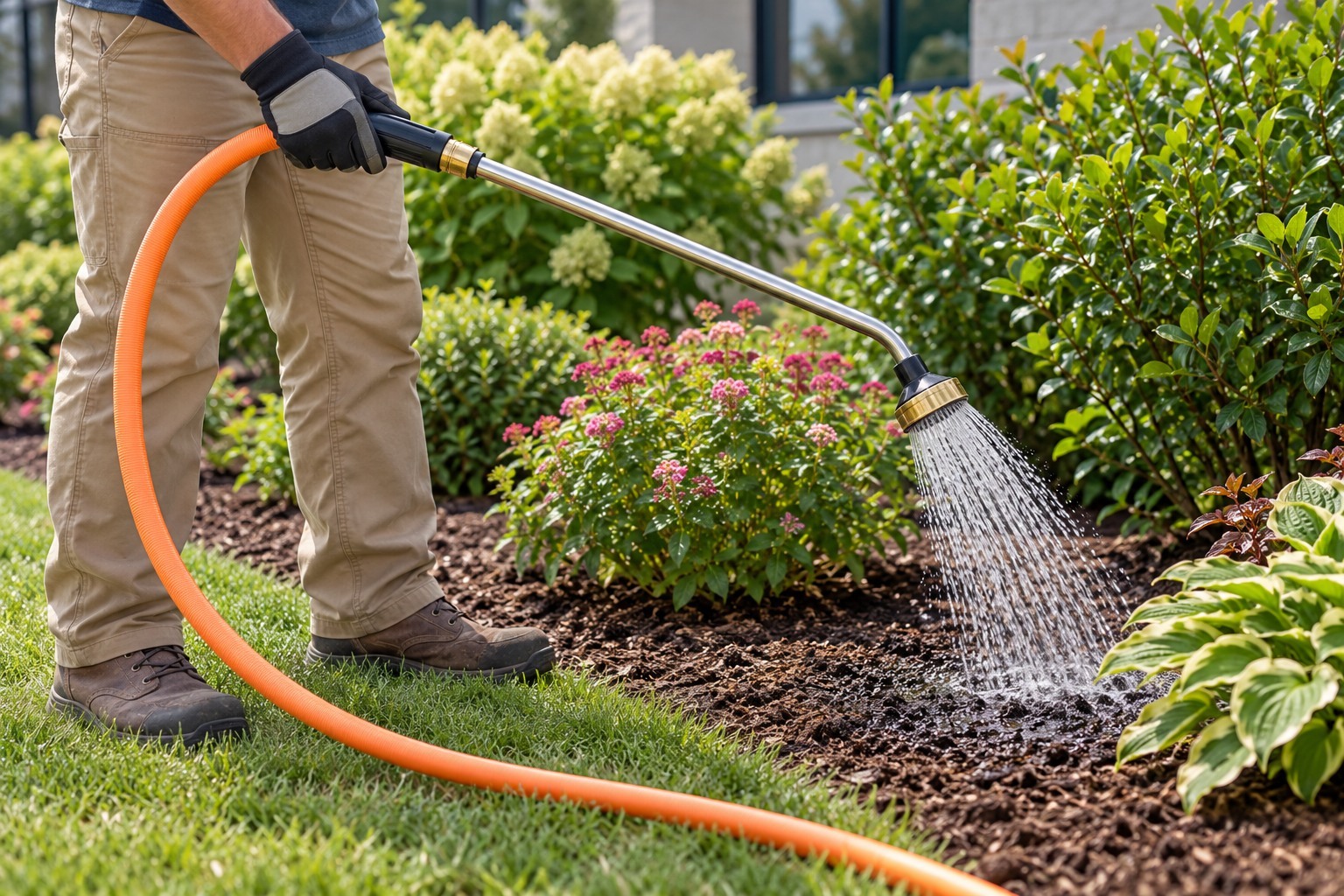
Landscape worker watering soil around established shrubs on a commercial property.

Water Established Beds and Plants

Shrubs, perennials and flower beds still need extra water between rains, especially in summer. Use a wand or soft-spray nozzle to put the water on the plants, not the sidewalk. Hand-watering is work you get paid for, and a light hose makes it go faster.

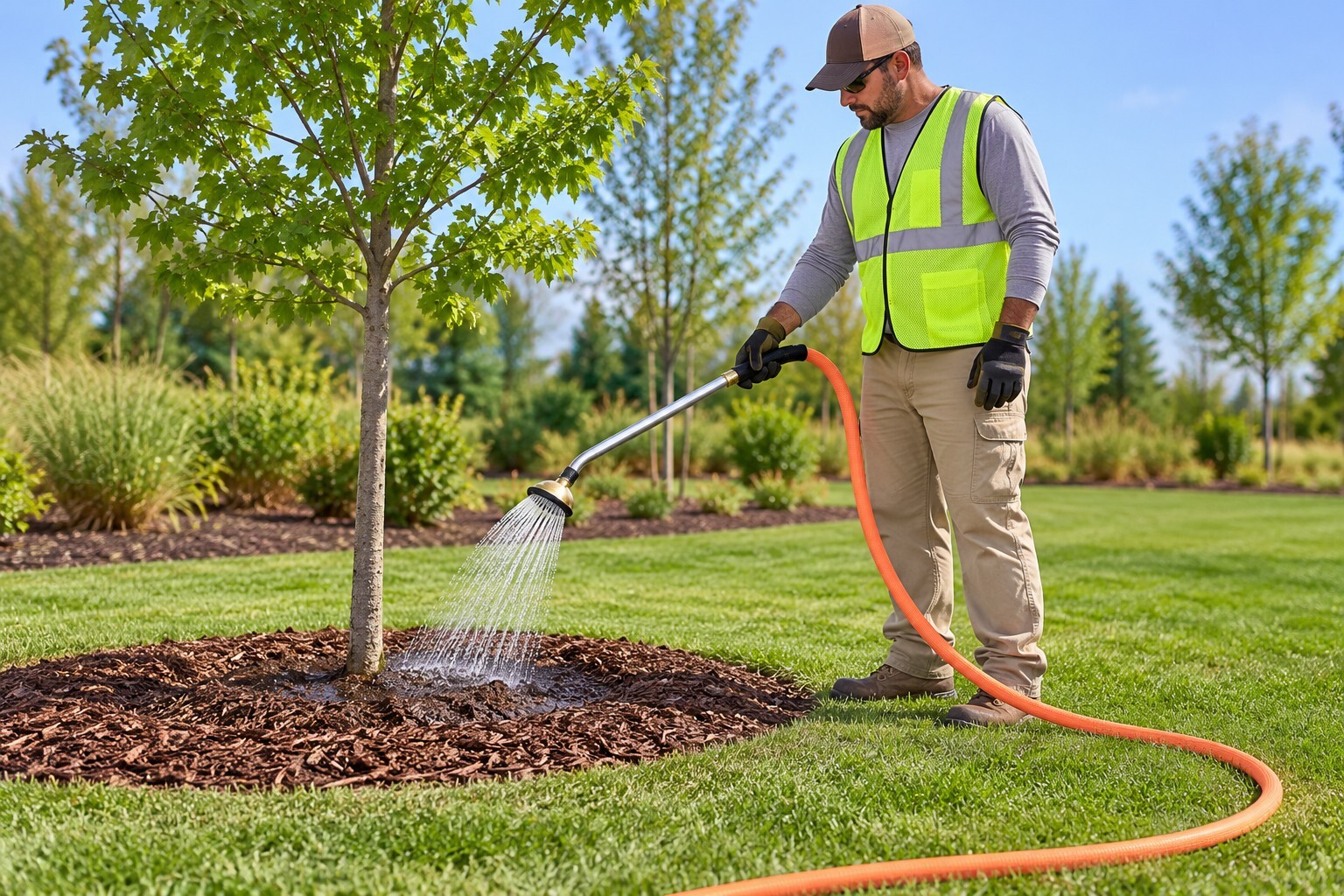
Worker watering the root ball of a newly planted tree in a fresh planting bed.

Follow Through on New Installations

New trees, shrubs and sod need steady water until their roots take hold, and if they die, you're the one paying to replace them. Give root balls a deep soak at every visit, and keep new sod wet until it roots in. A ¾-inch hose with a bubbler or soaker head gets the water right to the roots.

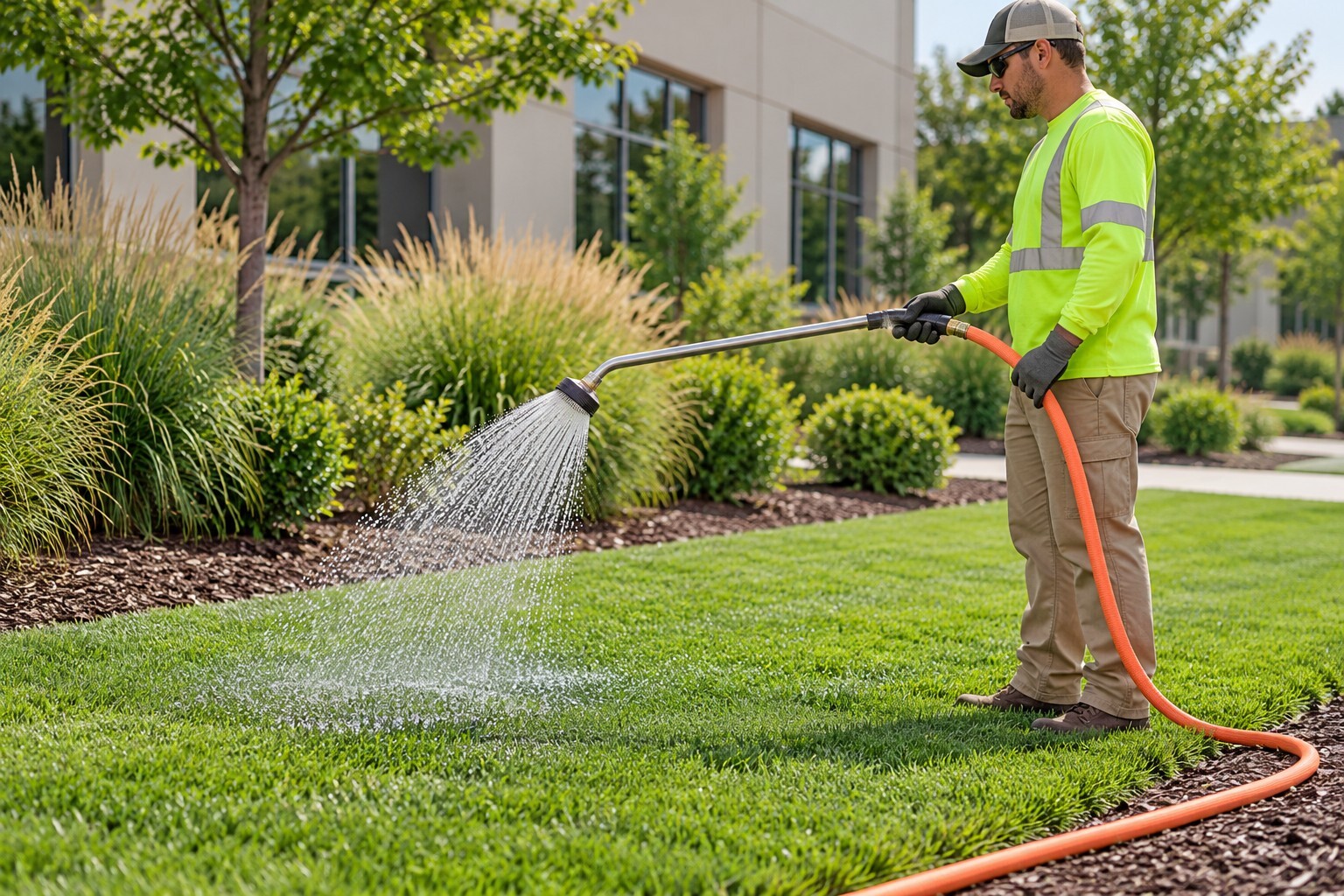
Worker hand watering a patch of natural-grass lawn on a landscaped property.

Reach Selected Lawn Areas

Some parts of the lawn always get missed by the sprinklers: next to beds, along buildings, by the driveway. A hose lets your crew water just those spots without running the whole system.

What to Consider

Carry From Job to Job

If your crew loads, unloads and carries hoses at every stop, weight makes a big difference. A 1-inch, 100-foot TurfCare Super Light weighs just 13.6 pounds. Your crew will notice by the tenth yard.

Reach Across the Property

Think about the yards on your route. Measure from a typical spigot to the farthest bed you water. Lots of crews carry a 100-foot hose plus a 50 they can hook on for big lots, so they're not dragging extra hose around small ones.

Water for the Planting

A tree root ball needs a slow, deep soak. New sod needs an even spray over the whole area. Match the wand or nozzle to the job. A ¾-inch hose also gets more water to the end of a long run than ⅝-inch, which helps when a customer's spigot is weak.

Work Around Hard Surfaces

Concrete, gravel and bed edges are rough on hoses. If your hose lives on a reel and gets dragged over driveways, our thick rubber contractor hose or TurfCare Heavy Duty is built for it. Keep hoses out of the way of traffic too.

Keep Tools Working Together

Check the spigot, hose ends, wand and reel together before you order. Our contractor hose, TurfCare Medium Duty and Heavy Duty all have brass ends made to be hooked up and unhooked all day.

Frequently Asked Questions

What's the best hose to keep on a landscape truck?

Most crews end up with two: a Super Light for carrying into back yards and beds, and a rubber contractor hose on the reel for long, rough runs. At 13.6 pounds for a 1" × 100', the Super Light is light enough that your crew will water properly instead of rushing through it.

How do we make sure new plants actually survive?

Water deeply and often until the roots get established. A slow soak at the base beats a quick spray over the top. With a ¾-inch hose and a soaker or bubbler head, you can leave water running at one tree while you work on the next. Your nursery can tell you how often to water each type of plant.

Will a commercial hose really last longer than a hardware store hose?

If you're replacing hardware store hoses every season, it's worth switching. Our contractor hose is thick rubber with brass ends, rated to 150 PSI, and it stays bendable down to -40°F. TurfCare hoses are made to order and rated 250–300 PSI. They're built for the way a crew treats a hose, and thin store-bought hoses just aren't.

Can we use a pump to drain a pond or water feature?

Absolutely, and it beats renting. Set the pump close to the water, put a strainer on the end of the suction hose and drop it in. Then run lay-flat hose to wherever the water can go. Match the hose size to your pump. The clear suction hose is handy here, because you can see when it starts pulling air or mud as the pond gets low.

What lengths can we get?

TurfCare hoses come in 25, 50, 75 and 100 feet, in ¾-inch or 1-inch, and we can make custom lengths. Rubber contractor hose comes in 50 and 100 feet, in ⅝-inch or ¾-inch. Lay-flat hose comes in 25 and 50 feet, and suction hose comes in 20 feet. Both hook together end to end if you need more reach.

Can we use the same hose to pressure wash patios and sidewalks?

Only to feed water into the machine. Your rubber contractor hose works great for that. But the hose from the pressure washer to the spray gun has to be a real pressure washer hose. Ours are rated to 4,000 PSI and can handle water up to 310°F.